
- Determines the thermal characteristics of your polymer such as the melting point and percent crystallinity
- Oxidation resistance analysis
- Kinetic modeling available
- Compositional analysis for volatiles, base polymer, carbon loading, in organics
- Simultaneous DSC analysis available
- Kinetic modeling available
- Material identification
- Software capabilities for multiple component matches
- Determines the flow rate of a polymer under different temperatures and load
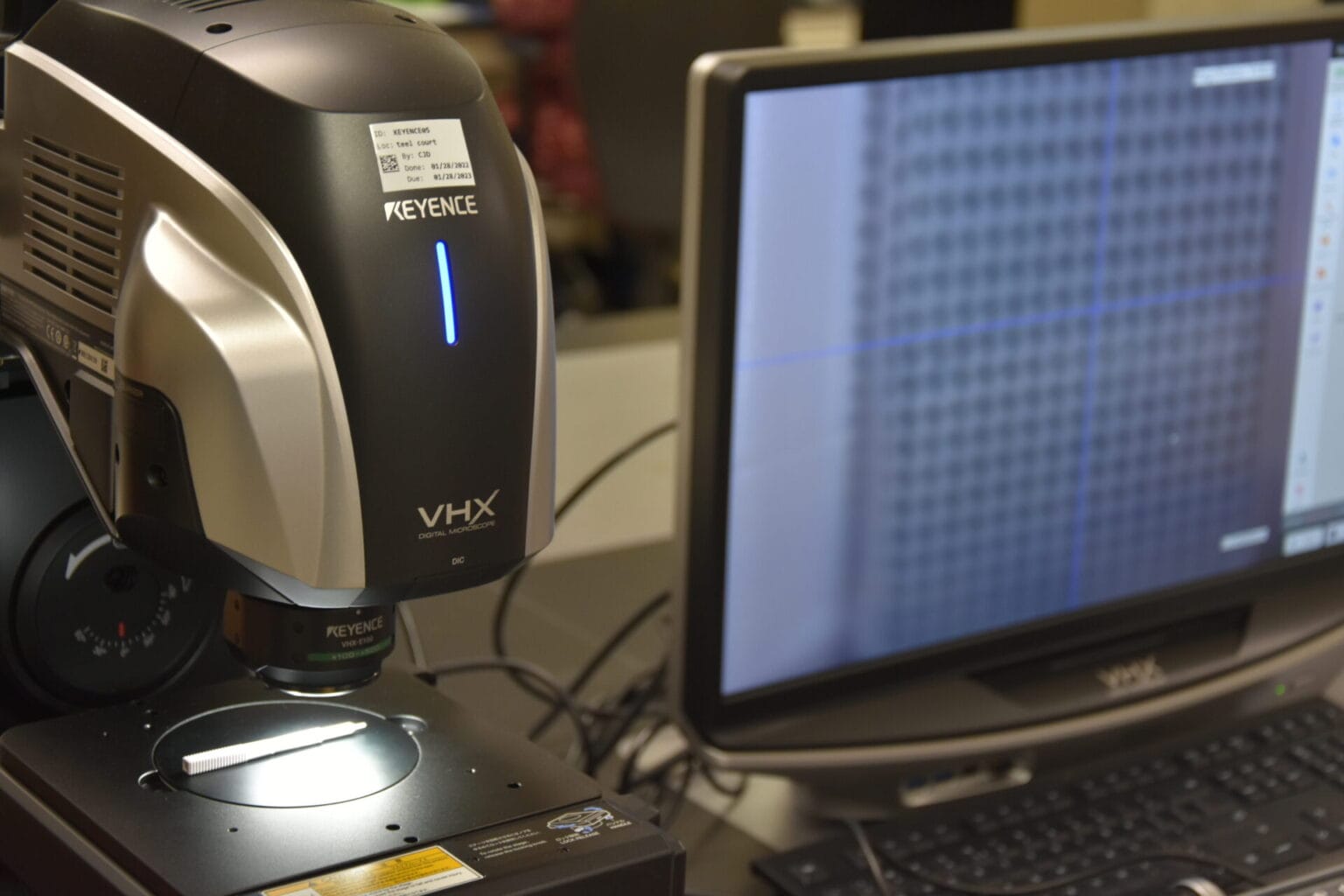
- Microscopic imaging available up to 200X
- Measurements (X, Y and Z planes) down to 0.005 mm or 0.0002 inches
- Determines the moisture in a material by relative humidity
Determines the weight loss associated with volatiles and moisture by exposure to elevated temperatures
Determines the viscosity of liquids by a rotational viscometer
Determines the density of solid material
Determines the volume of space occupied by a material
Determine the hardness of a material in Shore A and D scale
Sieve testing with a 10 to 270 mesh range (2.00mm to 53µm)
Dart or tup drop test
Tensile and compression testing available with up to 1500 lbs. of force
Resistance to short-time hydraulic pressure (quick burst)
Technique to identify and quantify components within a mixture
- Measures polymer resistance to crack propagation from surface-initiated micro-crack
- Widely used in polyethylene pipe markets
- Test results can correlate to products’ expected lifespan in the field
- Combinations of test capabilities or other tests not listed can generate invaluable information for your specific needs
- Examples of this include the identification of contaminants, the presence of DEHP in PVC, material degradation, percent VOCs, and many more
Teel Analytical Laboratories focuses on polymer testing services with expert skills and a personal touch.
Teel’s Analytical Lab is staffed by degreed chemists that can guide you through the process of deciding on a testing program, developing test protocols, and interpreting results. Direct consultation with one of our experts is available easily when needed.
Teel’s other customers can take advantage of Teel Analytical Laboratories during product development and troubleshooting. Having a lab on site allows for Teel to get results faster than when using outside facilities and can drive better decisions on both development and troubleshooting processes.
Testing Benefits
When a company decides to test their products, they are guaranteeing a better understanding during development and production. Not only is there understanding, but testing creates a large database of information. Access to this essential information will speed development and troubleshooting and save money.
Using an ISO/IEC 17025:2017 Accredited laboratory provides assurances the tests are done correctly and the results are reliable. Teel Analytical Laboratories specializes in plastics testing and has the experience and capabilities to determine the testing you need and the expertise to explain what those results mean.
Not sure what testing you need? Reach out to one of our helpful staff and they can help walk you through the process.
Teel Analytical Lab Q&A
Is Teel’s Analytical Lab accredited?
Yes, Teel’s Analytical Lab is ISO 17025:2017 accredited through Perry Johnson Laboratory Accreditation, Inc. ISO 17025 is a worldwide standard allowing analytical laboratories to demonstrate adherence to rigorous quality standards. Accreditation to the standard ensures that a lab’s internal standard operating procedures (SOPs) and testing practices comply with applicable ASTM standards. Teel is audited for its compliance to the standard’s quality requirements every year. Every other year, the audit includes an in-person demonstration where Teel must perform each of its approved tests for the observation of auditors.
What questions can the lab answer?
Using the test methods within its scope of accreditation (including custom test methods) Teel Analytical Labs can answer a variety of specific plastic material and product questions. Below are some of the most common.
Why did my part fail?
Our lab commonly investigates part cracking, breaking, and other failure modes. A common concern from manufacturers is determining what caused one part to fail while others made using the same production process did not. Degraded or brittle material, as well as molecular weight distribution or incorrect material composition can all contribute. Below are some examples of tests used to investigate failure possibilities depending on the specifics of a case.
| Is the part made of the correct material? | FTIR, TGA, DSC |
| Did the material degrade? | TGA, DSC, MFR |
| Is there contamination? | FTIR, TGA, DSC, Microscopy |
| Does the failed part differ from a good part? | FTIR, DSC, TGA, MFR, Mechanical Testing |
| Why did the part crack? | Microscopy, ESCR, FTIR, DSC |
| Was moisture involved? | Moisture Analysis, Loss on Drying, TGA |
What are this part’s material properties and performance capabilities?
To reverse engineer or create a clearer picture of an insufficiently understood part, the lab performs a series of tests investigating the part’s characteristics and combines the results in a full profile report. Below are some of the most important characteristics customers look for and the tests used to determine them.
| What polymer is the part made of? | FTIR, DSC |
| What else in the part (additives, etc.)? | TGA |
| What are its thermal characteristics? | DSC |
| How will the part flow during processing? | MFR |
| What are its physical characteristics? | Density |
| What are its mechanical capabilities? | Tensile, Compression, and Impact Testing |
How long can I expect this part to last?
As polymers tend to change over time, it can be important to understand the stability profile of a part to determine its lifespan and help ensure or improve its quality and integrity. Teel performs stability analyses to help customers understand how long their part will last and when it may start degrading and why. Below are some common stability concerns and the tests used to address them.
| How susceptible is the part to cracking? | ESCR |
| How will its thermal properties change? | DSC |
| When will the material start degrading? | TGA, MFR, Microscopy |
| How will moisture affect the part? | Moisture Analysis, Loss on Drying |
| How will it change chemically? | FTIR |
| How will it change mechanically? | Tensile Testing |
What does the process of working with the lab look like?
Lab personnel will gather as much information as possible in determining an initial testing plan to answer a customer’s questions or get to the root cause of a problem. Teel labs will then request appropriate samples, whether parts or polymer resin, and begin the testing. However, a customer isn’t required to complete the full testing program if needs change based on new data. The lab regularly eliminates tests from the schedule if the results from one test obviate the need for others. The lab may also recommend further testing if new questions arise, but the customer is not required to follow through with these.
The lab’s goal is to point customers only to the tests they need to sufficiently address their questions and concerns.
What will I get after testing is finished?
Customers receive a complete report with test data, explanation, and conclusions. For analysis that requires it, they will also receive an interpretation of the results suggesting the causes or factors contributing to why a customer is seeing an issue.
In the report, Teel Labs may provide graph spectrums such as the following FTIR spectrum example. The pattern of peaks on the graph reveals aspects of a part’s chemical composition. This allows the lab to compare the pattern of peaks to a reference library of graph spectrums and determine what materials are present in the sample. In the report, the lab will provide this raw data with an explanation and conclusions, such as what the material is and whether there may have been contamination or degradation.
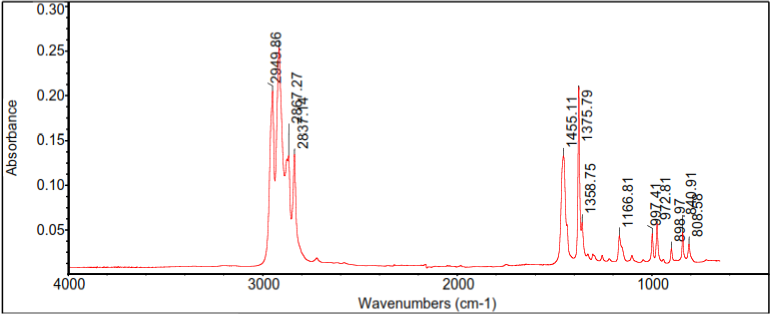
Figure 1: FTIR Spectrum Graph
For comparison analyses, the final report will show all comparison sets of raw data. Below are comparison thermograms from DSC tests on a failed part and a good part. DSC thermograms examine how a polymer responds to changes in temperature, and the temperature at which a polymer begins to change behavior can impact its integrity and point of failure. The comparison below was able to demonstrate the failed part had a higher crystallinity value, which contributes to brittleness.

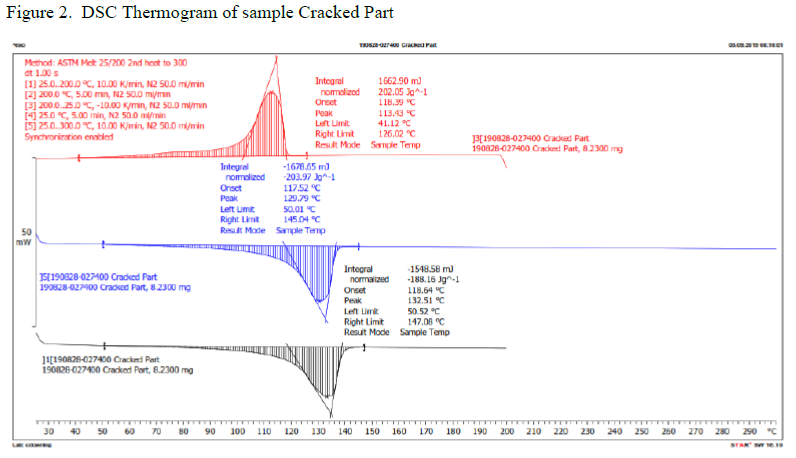
Figure 2: Two DSC Comparison Thermograms
Where interpretation is required, the report will include a final section highlighting relevant test results and suggesting root causes.
What is the turnaround time for test results?
Teel Labs completes testing and delivers its final report in at most 10 days.